Summary Remarks to Senate Judiciary Committee
John Lowe, Executive Vice President, Exploration and Production, ConocoPhillips
May 21, 2008
Good morning Chairman Leahy and members of the Committee. We share the public’s concern about rising energy prices and appreciate the opportunity to present our views on what is driving the increase, what our company is doing to respond and what we believe Congress can do.
Crude oil represents over 70% of the current cost of gasoline, so higher crude prices are driving higher gasoline prices.
So why have crude oil prices increased so dramatically? There are numerous factors, the biggest contributor being a long period of strong global economic growth – particularly in developing Asia. Limited access to resources, both here and abroad, also constrains the growth in supply. In addition, higher taxes, service cost inflation, little excess production capacity and high geopolitical risk also contribute.
Adding to this are the investor funds flowing into oil futures as a hedge against credit risk, inflation and dollar devaluation.
I cannot over-emphasize the access issue. Access to resources is severely restricted in the United States and abroad, and the American oil industry must compete with national oil companies, who are often much larger and have the support of their governments. We can only compete directly for 7% of the world’s available reserves, while about 75% is completely controlled by national oil companies, and are not accessible.
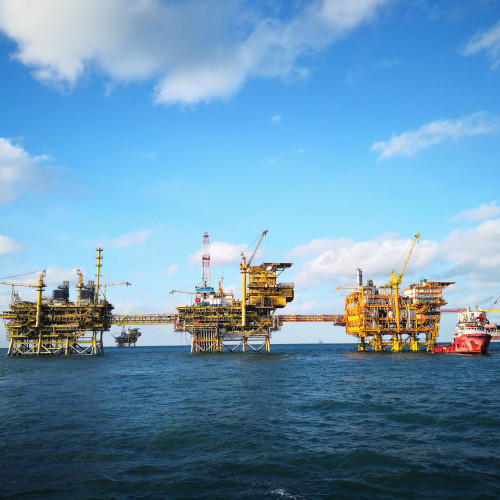
ConocoPhillips is working to bring more energy to the market. Over the past six years we have reinvested - on average - 106% of our income. In 2007 we earned $12 billion, but reinvested $13 billion – and we have over $15 billion in investments planned this year. This investment includes finding added supplies of oil and gas, expanding refining capacity and continuing to research and bring renewable and alternative fuels to the market.
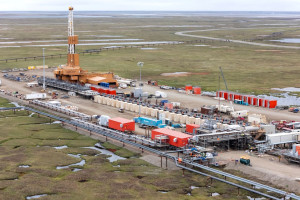
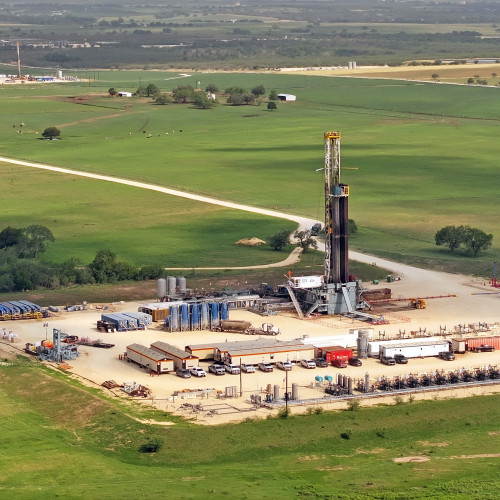
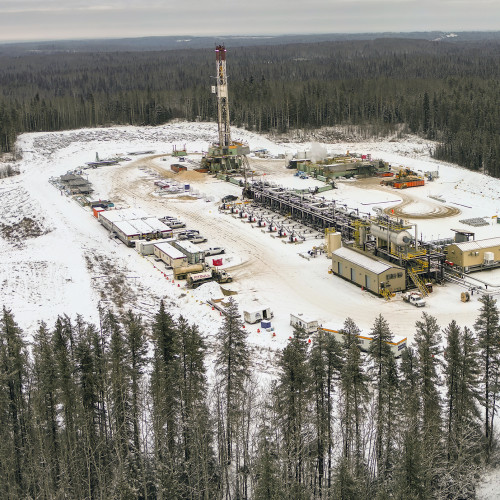
Here in North America, we are drilling exploratory wells, developing the Canadian oil sands and building infrastructure. But we want to do more -- such as explore the vast areas of the U.S. that are off-limits due to drilling moratoriums. These areas could more than double the nation’s oil and gas reserves.
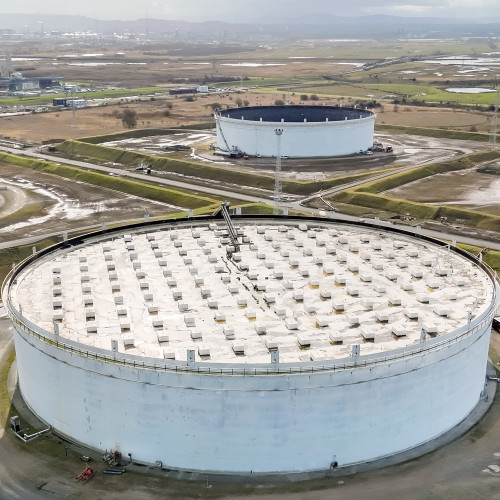
Downstream, we are increasing our refining capacity and ability to process lower-quality crudes. Unfortunately our efforts here in the U.S. have been met with continuing opposition. At our Wood River Illinois refinery, the 10th largest in the United States, we are experiencing long permitting delays via the appeals process that are blocking our expansion plans. In California, a project to make ultra-low-sulfur diesel fuel has been threatened by permit challenge for 4 years.
We are working hard to bring renewable fuels into the market by looking at ways to process them at traditional refineries, and researching new technologies.
- 55% of our U.S. gasoline volumes contain ethanol.
- E-85 and biodiesel are being marketed at our facilities.
- We are producing renewable diesel fuel, and researching next-generation biofuels like cellulosic ethanol.
- And we are developing better materials for the lithium-ion batteries in electric vehicles.
So what can Congress do to help address energy concerns?
Congress can enact a balanced national energy policy that:
- Encourages development of the conventional fuels that power our economy.
- Clears the permitting logjam.
- Encourages alternative sources, including all forms of biofuels, and removes the current tariff on imported ethanol.
- Encourages higher energy efficiency.
- And accelerates technological innovation.
Meanwhile, we urge you not to pass measures that have public appeal, but would be counterproductive, such as tax increases that diminish our investment capabilities, reduce the attractiveness of high-cost domestic production, or disadvantage U.S. oil and gas companies.
This has been tried before with extremely negative results – reducing supplies, eliminating jobs and resulting in higher prices. The nation cannot afford to make that mistake again.
The U.S. is in a global race for energy. We are competing against national oil companies that are far larger, and that enjoy preferred access and governmental cooperation.
We must move beyond today’s adversarial relationship and start working together to find real solutions.
U.S. oil companies should be viewed as the key to the energy solution – not as scapegoats – but as assets in this global energy race. We must be allowed to compete on level ground for the benefit of our country.
Mr. Chairman, this concludes my statement.
END
Top of page