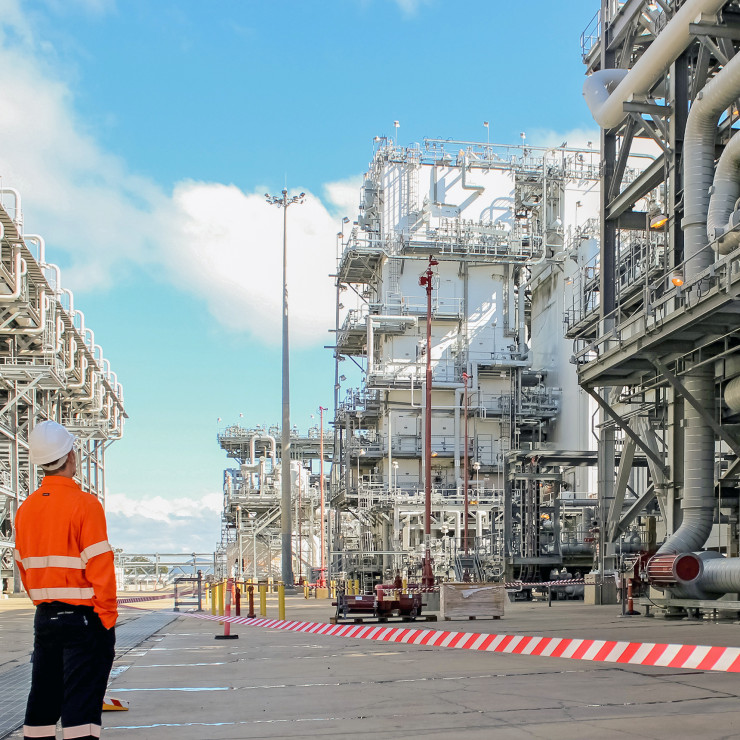
APLNG facility on Curtis Island
In the world of liquefied natural gas (LNG) production, where safety is paramount, it is natural to assume that long-standing operating limits are the most effective simply because they have always worked.
Sometimes, the pathway to unlocking production performance gains begins with a single, curious question: What if the accepted limits aren’t fixed and greater performance is possible?
At the Australia Pacific LNG (APLNG) facility on Curtis Island, this question opened the door to innovation.
By rethinking established operational limits, a team of process engineers and operators found a way to increase LNG production and improve energy efficiency, without any physical modifications, boosting each LNG train’s output.
Central to this success was rethinking a critical operating limit — the LNG condensing temperature, known as the subcool margin, in the ConocoPhillips Optimized Cascade® Process.

From simulation to implementation
With their sights set on challenging the subcool margin, the APLNG facility team conducted an investigation involving complex calculations and simulations.
Was more production performance being left on the table?
The simulation models said yes, considering the actual operating conditions, and demonstrated that the proposed reduction of the cooling buffer could work in the facility’s infrastructure.
With promising results in hand, the team moved from theory to practice.
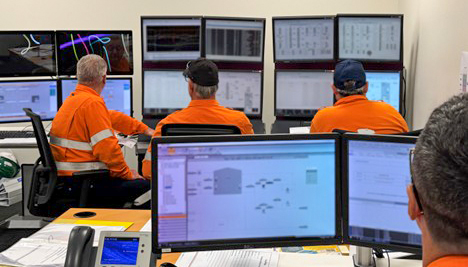
Real-world trials began, with operations, engineering and risk-management experts working together to fine-tune pressure and temperature settings in the facility’s process.
They rigorously reviewed every step to ensure the change could be implemented safely, with additional controls in place and without any negative impact on LNG production.
By leveraging digital simulation tools, validating assumptions and ideas, and empowering a collaborative workforce, APLNG is not just producing more LNG, it’s doing it smarter, safer and more sustainably — a result made possible by the deep technical expertise ConocoPhillips has cultivated over six decades in LNG process design and optimization.